Table of contents
Missed connections, lost luggage, a hotel that “doesn’t exist” on arrival, travel mishaps are as old as travel itself, yet in the past year they have taken on a new intensity as crowded hubs, staffing gaps, and extreme weather collide with record demand. What looks like bad luck often becomes a stress test for planning, budgeting, and decision-making under pressure, and many seasoned travelers say the lessons learned in those moments end up shaping how they move through the world long after the trip ends.
When the trip breaks, you learn fast
What do you do when Plan A evaporates? In the moment, a missed flight or a sudden cancellation feels like pure chaos, yet it reliably exposes the same hidden variables: how much slack you built into the itinerary, how well you understood the rules of your ticket, and whether you can make calm, rapid choices with incomplete information. In 2024 and 2025, airports and rail networks have repeatedly shown how quickly a minor delay can cascade, especially during peak school holidays and major events, and the practical takeaway is blunt, build in margins or pay for them later.
Data gives that intuition some weight. Airlines and regulators have documented that delays and cancellations rise sharply during summer peaks, and extreme weather is now a major driver of disruption in both North America and Europe, with thunderstorms, heatwaves, and flooding forcing ground stops and re-routings. At the individual level, the first life-changing piece of advice tends to be structural: schedule fewer “must-do” items per day, avoid tight self-transfers, and treat the first and last day as buffer zones rather than sightseeing marathons. Travelers who adopt that approach are not being timid, they are buying decision time, the single most valuable currency when things unravel.
The second lesson is contractual, and it arrives the first time someone realizes that “non-refundable” does not always mean “no options.” Fare conditions, passenger rights, and insurance policies are dense, but they determine whether you sleep in a bed or on a terminal bench. In the European Union, for instance, the EU’s air passenger rights framework obliges airlines to provide care during long delays and, in specific cases, compensation, while also setting rules around re-routing and refunds. Knowing how to document a disruption, keep receipts, and ask for the right remedy turns misfortune into leverage, and the confidence that comes from that knowledge often changes how people negotiate in everyday life, from work to family logistics.
Finally, there is an emotional skill that mishaps train better than any self-help book: reframing. The traveler who stops treating disruption as a personal insult, and starts seeing it as a problem to solve, tends to recover faster, spend less, and even remember the trip more fondly. That is not romanticizing inconvenience, it is acknowledging a behavioral reality, stress narrows attention, while a deliberate pause widens options. A quick checklist, food, water, battery, documents, then decisions, is unglamorous, yet it is the kind of method that people carry home, and apply when a meeting derails or a plan collapses.
The wallet pain teaches smarter habits
Nothing clarifies priorities like an unexpected bill. One night of last-minute accommodation, a replacement rail ticket, or a pricey airport meal can turn a carefully planned budget into a blur, and the sting is often what pushes travelers to redesign how they handle money on the road. The lesson that sticks is not simply “save more,” it is “separate money by purpose,” because when everything sits in one pot, every decision feels like a loss.
Budgeting data points help explain why travelers feel squeezed. Post-pandemic demand surged, and with it came higher prices for lodging in many major cities, plus pressure on popular routes during weekends and event periods. Even when headline inflation cools, travel costs can remain volatile because they respond to capacity, seasonality, and sudden shocks. The practical response is to treat a trip budget like a newsroom treats breaking news: expect surprises, fund contingencies, and keep receipts. Many experienced travelers now set aside a dedicated “disruption buffer,” often 10% to 20% of total trip costs, not as pessimism but as insurance against being forced into the worst-value choices when time is short.
Payment tools matter, too, and mishaps often expose weak points. A card that blocks foreign transactions, a bank that flags a legitimate purchase, or a forgotten PIN can trap someone in a cash-only corner at the worst possible moment. The advice that emerges is specific: carry at least two payment methods, store emergency cash separately, and keep digital copies of key documents, while also knowing how to access support numbers without relying on a dead phone. These steps sound procedural, yet they reduce the cognitive load in a crisis, and that reduction is what makes better decisions possible.
There is also a subtler financial lesson: value is not the same as price. Travelers who get burned by a too-cheap connection or a rock-bottom hotel that collapses under real-life conditions often become more strategic buyers. They start paying for early check-in on long-haul arrivals, for flexible fares when schedules are uncertain, and for locations that reduce commute time, because time lost is money lost, even on vacation. Over time, this recalibration can be life-changing, it teaches people to spend intentionally, not impulsively, and to stop chasing bargains that quietly inflate the final cost.
Strangers become the real safety net
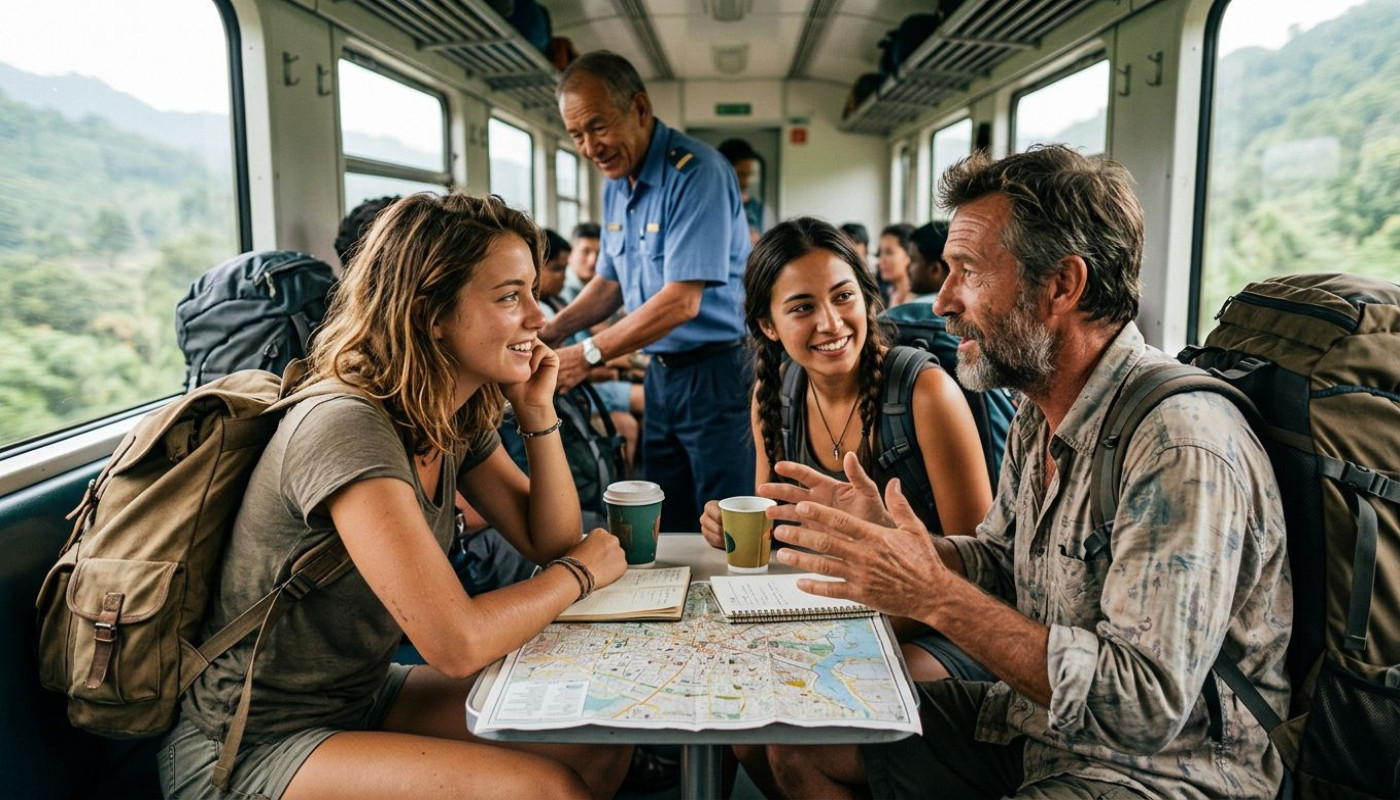
Ever noticed who shows up when things go wrong? Travel mishaps have a way of stripping away the polished version of a trip, and revealing the social layer underneath, the fellow passenger who translates, the receptionist who calls three taxis, the neighbor in the queue who shares a charger. Those small interventions can change not only the trip but a person’s sense of trust, and they often become the story told for years, not the museum visited or the restaurant booked.
There is research behind the intuition that social connection boosts resilience. In psychology, perceived social support is consistently linked to better coping under stress, and travel disruptions are a condensed laboratory for that dynamic. When someone is disoriented in an unfamiliar place, even minor help can reset the nervous system, and that calm opens the door to better choices. The life-changing advice that grows from this is practical and ethical at once: ask clearly, offer quickly, and do not underestimate small kindness. Many travelers who have been helped during a crisis become the person who helps next time, and that shift in identity can follow them far beyond tourism.
Preparation can make these interactions easier. Learning a handful of phrases, keeping addresses written down as well as saved digitally, and knowing local norms around tipping and queues reduces friction, and makes it more likely that people will engage positively. It also helps to anchor yourself in reliable information, especially when rumors spread in crowded terminals. Official airport announcements, rail operator updates, and accommodation confirmations matter, but so does having a simple, trustworthy planning reference for the destination, particularly in a city where demand and events can change availability overnight. For travelers heading to Spain’s capital, having a clear, practical guide to options and neighborhoods, such as https://www.madrid-trip.com/, can reduce uncertainty, and free up attention for the human moments that make a disruption survivable.
There is, finally, a humility lesson that mishaps enforce. When plans fail, everyone becomes a beginner, regardless of status, job title, or the number of stamps in a passport. That shared vulnerability can dissolve social barriers quickly, and when people experience that, they often return home less rigid, more patient, and more willing to admit they need help. In a world that rewards control, travel disruption teaches a different competence: adaptability with other people, not just competence alone.
Detours rewrite what you thought you wanted
Sometimes the best part is the part you didn’t book. A forced detour, an extra day in an unplanned neighborhood, or a missed reservation that leads to a different table can nudge travelers into experiences that feel more personal than the original itinerary. The advice here is not to chase chaos, it is to leave room for it, because the unexpected often aligns more closely with curiosity than with checklists.
Behavioral economists would call this a correction to “itinerary overconfidence,” the tendency to believe we can forecast enjoyment with precision. Yet enjoyment is context-dependent, and disruptions change context. A rainy day can turn a city into a museum crawl, a transit strike can push someone into walking, and a hotel mix-up can land a traveler in a calmer district that better matches their pace. These aren’t guaranteed upgrades, of course, but they can reveal preferences people didn’t know they had, quieter mornings, longer meals, less movement, more local texture. That discovery can be lasting, reshaping how someone spends weekends at home, how they plan future vacations, even how they define rest.
The key is to convert disruption into a deliberate choice as quickly as possible. Instead of clinging to a broken schedule, the traveler who pauses, maps the constraints, and chooses a new plan, even a modest one, regains agency. Agency is what transforms “this is happening to me” into “I’m deciding what happens next,” and that shift is often the true life-changing outcome. People remember not only that they overcame a problem, but that they became someone who can.
There is also a cautionary edge to this lesson: flexibility should not mean accepting unsafe or exploitative conditions. When rebooking, travelers should prioritize licensed transport, verified addresses, and clear cancellation terms, and they should be wary of pressure tactics in peak moments. A detour is only a gift when it is chosen freely, with eyes open, and a basic framework for vetting options can protect both wallet and wellbeing. In that sense, the most mature travel advice born from mishaps is balanced: stay open to surprise, and stay rigorous about the essentials.
Before you go: make disruption affordable
Book transport with breathing room, and price a contingency buffer of 10% to 20% into the budget. Keep screenshots of tickets, policies, and addresses, and carry two payment methods plus emergency cash. Check whether your card, insurer, or carrier offers assistance, and if you qualify for passenger-rights remedies; then reserve key nights early when demand spikes.
Similar

Packing Less, Experiencing More: The Art Of Minimalist Adventures
How Local Festivals Shape Unforgettable Travel Experiences

Can Slow Travel Transform Your Relationship With Destinations?

How Unexpected Local Activities Can Transform Your Trip Experience

Steps To Acquire A Social Security Number For Expats In Portugal


Here Are Three Places You Must Visit in Latin America

Here's Where You Can Visit in England

