Table of contents
From Edinburgh’s packed August streets to Brazil’s thunderous Carnival, local festivals have become one of travel’s strongest magnets, and not just for spectacle. They reshape where people go, when they book, how long they stay, and what they spend once they arrive. For destinations, they can mean record hotel occupancy, crowded airports, and a surge in short-term jobs, but they also raise questions about capacity, pricing, and authenticity. For travelers, the payoff is often simple: memories that feel earned, not staged.
Why festivals pull travelers off the map
It starts with one promise: the “only here, only now” effect. Unlike museums or landmarks that wait patiently year-round, festivals concentrate culture into a fixed window, and that scarcity is powerful. Tourism analysts have long pointed out that limited-time events can shift demand more effectively than broad branding campaigns, because they give travelers a reason to commit, and to commit fast. The Edinburgh Festival Fringe, widely described as the world’s largest arts festival, has repeatedly reported millions of attendances across its program each summer, and it routinely fills the city’s accommodation stock well beyond typical seasonal demand. Rio de Janeiro’s Carnival, meanwhile, draws visitors on a scale that forces the city to operate in a different gear, with transport, policing, and hospitality infrastructure pushed toward peak capacity.
The pull is not only about famous headliners. Smaller towns use festivals as a shortcut to visibility, and, in practice, as a way to move from “day trip” to “overnight stay.” A food weekend, a saints’ day procession, a local wine harvest celebration, or a contemporary music lineup can add narrative to a place that otherwise sits outside the main tourist circuit, and that narrative translates into bookings. Travelers respond because festivals reduce the risk of disappointment: even if the weather turns, even if one restaurant is full, the calendar provides built-in momentum. You are not merely visiting; you are arriving into a story already in motion, with streets designed for gathering and locals who know exactly where the energy is.
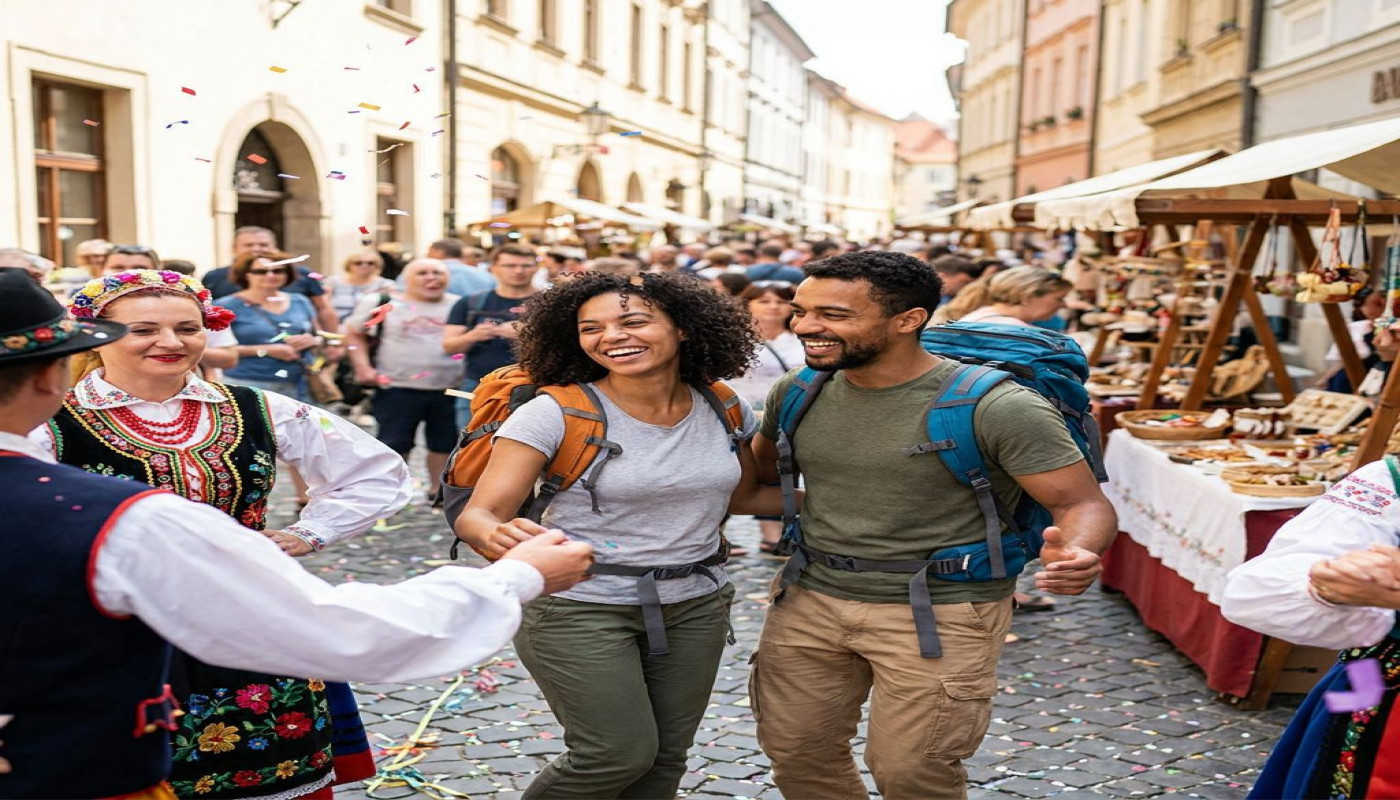
What makes that experience unforgettable is the way festivals compress encounters. In a single afternoon you can move from a street parade to a family-run bar, from a pop-up craft market to a late-night concert, and every transition comes with a sense of shared purpose. It is also why first-time visitors often remember a festival trip more vividly than a standard itinerary; the sensory density is higher, the social contact is easier, and the city feels less like a backdrop and more like a character. Those are not soft impressions alone: tourism boards track event-driven spikes in arrivals, average daily spend, and length of stay, and festival weeks frequently outperform non-event periods on all three measures.
Money, jobs, and the hidden price tag
Festivals are tourism engines, but they are also complex economic machines. When a major event lands, hotels can sell out, restaurants add extra sittings, ride-hailing demand surges, and temporary staff find work quickly, and that wave reaches beyond the headline venues. The effects can be measured in visitor nights, tax receipts, and occupancy rates, yet the truer picture includes the less visible costs: public sanitation, traffic management, security, noise mitigation, and the wear on historic centers that were never built for modern crowd volumes. Cities that host big annual gatherings often budget for these operational pressures long before the first ticket is sold.
Pricing is where the debate becomes personal. Festival periods tend to push accommodation rates upward, and the burden does not fall evenly. Travelers with flexible budgets can absorb inflated prices, while residents face knock-on effects such as crowded public transport, overstretched local services, and in some cases the conversion of long-term rentals into short-term lets. That tension has driven policy responses in multiple European cities, from tighter rules on short-term rentals to crowd-control measures around iconic sites. The goal is not to kill the festival; it is to keep the host city livable, so the event remains sustainable rather than self-defeating.
There is also the question of who profits. A festival can channel revenue toward large operators, yet the most cherished travel moments often happen with small businesses, the family bakery extending hours, the neighborhood tavern setting out extra tables, the artisans selling handmade pieces that are not found in airport shops. Some destinations now design festival programming with this in mind, spreading stages across districts, scheduling daytime events to support local commerce, and encouraging visitors to explore beyond the central square. Done well, the economic uplift becomes more inclusive, and the traveler gains a more textured city in return.
For travelers planning a festival trip, the financial reality is straightforward: the earlier you book, the more choices you keep. Transport prices usually rise as availability tightens, and hotels near venues can become scarce months in advance for globally known events. The smart move is to treat the festival as the anchor, then build a flexible itinerary around it, choosing a base that balances proximity with calmer neighborhoods. Even in cities where everything feels walkable, late-night transport after headline shows can be the difference between a magical evening and a logistical headache.
Authenticity on stage, and in the streets
What do visitors really want when they chase festivals? Often, it is not the perfect photo, but the feeling of being present for something that matters to locals. Authenticity is a slippery word, yet travelers recognize its opposite immediately: performances staged solely for tourists, generic “traditional” outfits, and marketplaces that look the same from one country to another. The strongest festivals avoid that trap because they are not created for visitors in the first place. They may welcome outsiders warmly, but their emotional center remains local, tied to a calendar, a patron saint, a seasonal harvest, a musical lineage, or a political history.
That local center is also what makes the travel experience unforgettable, and sometimes challenging. If you attend a religious procession, you are stepping into a community ritual, not a theater show, so the etiquette changes. If the festival takes over narrow streets, you cannot simply “opt out” of the crowd; you learn patience, you follow the flow, you accept that the city belongs to the event for a few days. Those moments can be frustrating, yet they are precisely what separates festival travel from curated tourism. You are negotiating real space with real people, and that friction, managed with respect, can feel like a form of connection.
Music and food festivals create a different kind of authenticity: one rooted in contemporary life. A lineup can tell you what a city listens to now, not what it performed a century ago, and the best culinary events reveal how locals actually eat, from snack culture to late-night habits. Travelers who immerse themselves tend to remember details that never appear in brochures: the rhythm of a neighborhood drum circle, the way strangers trade recommendations in a queue, the small bar that becomes an unofficial after-party hub. Festivals, at their best, turn anonymity into conversation, and turn a destination into a shared experience rather than a checklist.
Yet authenticity must be protected. When attendance grows too fast, organizers can be tempted to simplify programming, increase sponsorship visibility, or prioritize easy-to-sell spectacles. Some events resist by limiting capacity, rotating locations, or preserving community-led elements that cannot be scaled without losing meaning. For travelers, the lesson is clear: if you want the real atmosphere, show up with curiosity rather than entitlement. Learn the basic customs, respect restricted areas, and remember that the festival is not a theme park; it is a living part of local identity.
Porto’s festival pulse, beyond the postcard
Few European cities illustrate the festival effect as clearly as Porto, where heritage, music, and street life collide along the Douro. Visit during a major local celebration and the city feels different: louder, warmer, more communal, with public space used as a stage rather than a corridor. São João, Porto’s iconic June festival, is a prime example, known for packed riverside areas, fireworks over the water, and the kind of collective joy that dissolves the boundary between residents and visitors. Even outside the largest nights, the city’s calendar is dotted with cultural programming that pulls travelers into neighborhoods they might otherwise skip.
For visitors, the key is logistics. Porto’s historic center is dense, and festival crowds can turn short distances into slow journeys, especially around the riverfront and main bridges. Booking accommodation early helps, but so does thinking like a local: plan walks instead of relying on taxis at peak hours, eat earlier if you want calmer service, and keep a flexible schedule so you can follow the atmosphere when it shifts from one street to another. If you are assembling an itinerary that balances festival energy with quieter discoveries, a practical starting point is https://www.porto-trip.com/, which can help structure days around what is actually happening in the city rather than around generic must-see lists.
The most memorable Porto festival experiences often happen in the margins. You might come for a headline concert, yet remember the spontaneous singing outside a corner café, the grilled sardines shared at standing tables, the way the city’s steep streets amplify sound and laughter. Porto also rewards the traveler who looks beyond the main viewpoints, because festivals tend to radiate outward, and each district adds its own tone. One evening can begin with a formal cultural event and end with an unplanned conversation on a stairway, and that is the essence of festival travel: it creates the conditions for surprise.
There is, however, a responsibility that comes with that privilege. Porto, like many sought-after European cities, navigates pressure on housing, crowding in peak seasons, and the delicate task of preserving daily life while welcoming the world. Travelers can be part of the solution by choosing off-peak dates when possible, supporting local businesses, and moving through residential areas with care, especially late at night. The payoff is mutual: the city keeps its character, and the visitor gets an experience that feels genuinely Porto, not a copy of somewhere else.
Before you book, ask three questions
First, what are your non-negotiables: the main parade, the opening concert, the fireworks, the food market? Build around them, because festivals reward focus more than exhaustive schedules. Second, what is your budget tolerance for peak pricing, and are you willing to stay slightly farther out to trade distance for comfort? Third, how will you move at night, when crowds thicken and transport options narrow?
If you plan with those answers, you can book earlier, reserve key tickets, and leave room for improvisation. That balance, structure plus spontaneity, is where festival travel becomes unforgettable.
Booking smart for festival season
Reserve accommodation and trains early, set a realistic daily budget for peak nights, and check whether the destination offers local transport passes or event-linked discounts. In some cities, cultural vouchers and municipal promotions can reduce costs, but they sell out quickly. Keep one free evening, and let the festival choose it.
Similar
How Unexpected Travel Mishaps Become Life-changing Advice
Can Slow Travel Transform Your Relationship With Destinations?
How Unexpected Local Activities Can Transform Your Trip Experience

Steps To Acquire A Social Security Number For Expats In Portugal

Beautiful Hiking in Palawan

Here Are Three Places You Must Visit in Latin America

Here's Where You Can Visit in England

The Best Legendary Monuments in the United States
