Table of contents
What if the most meaningful trips were the least efficient? As airlines add flights and cities court record numbers of visitors, a countercurrent is gaining ground, slow travel, which swaps frantic checklists for longer stays, fewer stops, and deeper contact with place and people. It is not just a lifestyle trend, it is also a response to overcrowding, rising costs, and climate concerns. The promise is simple: travel less, experience more, and come home changed.
When “seeing it all” stops working
Fast travel sells an illusion of mastery, the idea that a weekend is enough to “do” Rome, Tokyo, or Reykjavík, and that a tight itinerary equals a rich experience. In practice, the math rarely adds up. A typical short city break can surrender a surprising share of time to transit, check-ins, queues, and orientation, and if you are crossing time zones, jet lag further eats into the hours you believed you had bought. Tourism researchers have long noted that satisfaction does not rise linearly with the number of attractions visited, instead it is shaped by perceived authenticity, autonomy, and the quality of interactions, all of which tend to shrink when a schedule is packed.
The consequences are not only personal. Globally, tourism has surged back after the pandemic disruption, with the UN World Tourism Organization reporting that international tourist arrivals reached about 1.3 billion in 2023, roughly 88% of 2019 levels, and that 2024 was tracking toward a near-complete recovery. More arrivals mean more pressure on iconic districts, more competition for housing, and more “defensive” policies from cities attempting to regulate flows. Venice has rolled out day-tripper charges in an effort to manage peaks, Barcelona has debated restrictions on tourist apartments, and popular national parks from the United States to Europe have expanded reservation systems. When visitors move quickly and concentrate on the same postcard sites, residents feel the strain first, and travelers feel it too, through crowds, inflated prices, and a creeping sense that the destination is performing rather than living.
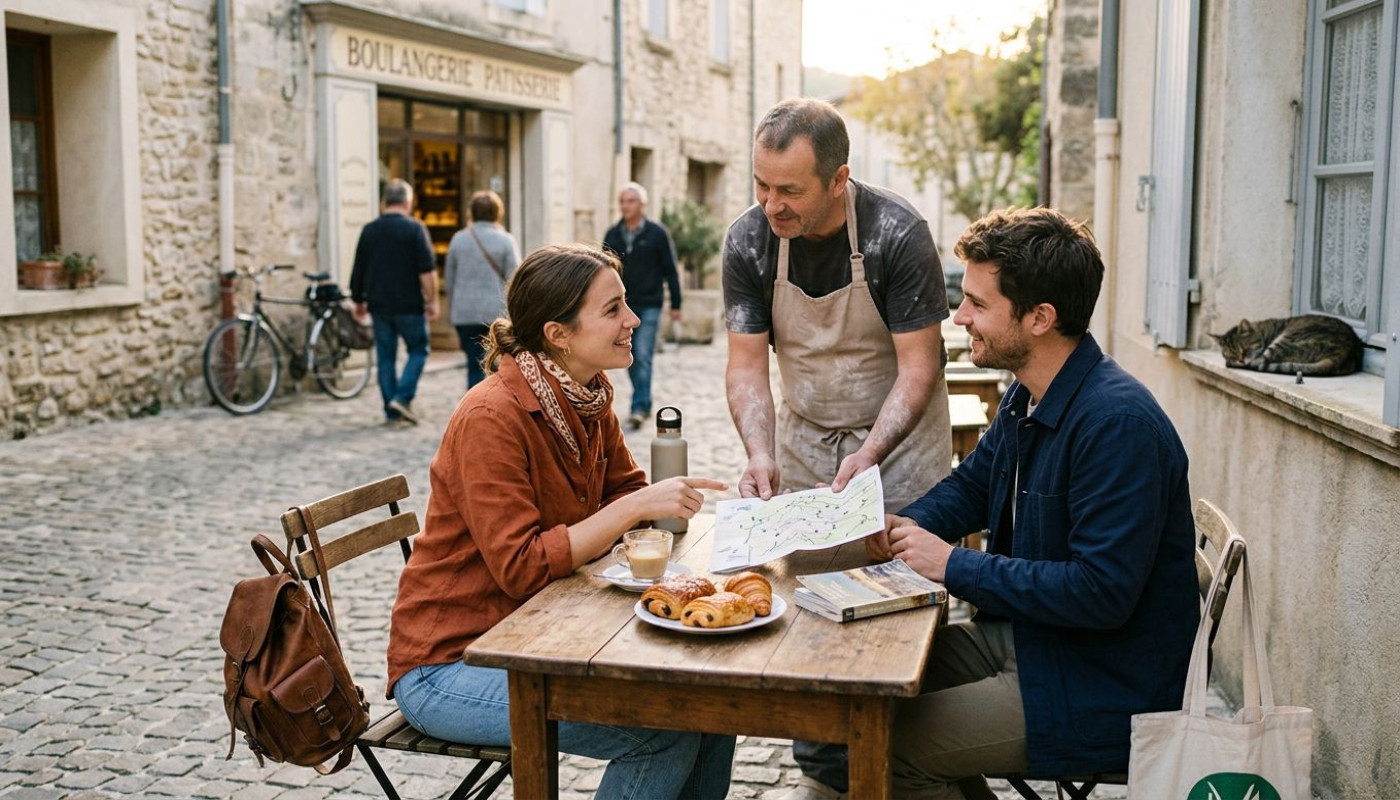
Slow travel begins with a refusal: you do not have to win a destination. It invites a different measure of success, one built on memory, relationships, and attention. Instead of three cities in five days, it might mean one neighborhood for a week, returning to the same café until the barista recognizes you, or taking the train not because it is romantic, but because it makes the landscape legible. The shift can feel uncomfortable at first; idleness has been trained out of modern tourism. Yet that discomfort is often the point, because it is where a destination stops being a backdrop and starts becoming a place.
Time, attention, and the brain on holiday
Can moving slower actually change what you remember? Cognitive science offers clues. Memory consolidates through repetition, sleep, and emotional salience, and travel overload can blunt all three, as constant novelty becomes noise and stress hormones rise with delays, navigation, and decision fatigue. The brain also encodes context, the sounds of a market at dawn, the rhythm of a local commute, the small rituals that signal “this is how life works here.” Those details are hard to capture when you are always leaving. In that sense, slow travel is not simply about rest, it is about creating the conditions for richer encoding and, later, richer recall.
There is also the social dimension. Longer stays increase the probability of weak ties, brief but real interactions that can anchor a trip: a conversation with a bookseller, a recommendation from a neighbor, a shared joke with a bus driver. These moments are statistically unlikely when your day is built around timed tickets and constant relocation. They also tend to disrupt stereotypes, because you meet people in roles beyond “service” or “tourist.” Psychologists often describe contact, especially repeated contact, as a key ingredient in reducing prejudice, and while travel is not diplomacy, it can create a more textured understanding of place, one that survives beyond the highlight reel.
Crucially, slow travel can reshape your relationship with uncertainty. Fast travel is control-heavy: reservations, routes, contingency plans. Slower itineraries tolerate friction, and sometimes even welcome it, because a missed train is not a disaster when you are not chasing a checklist. Many seasoned travelers describe a turning point where the goal stops being to avoid inconvenience and becomes to stay curious through it. That mindset does not eliminate stress, but it reframes it, and the destination becomes less of a product to consume and more of a setting where life happens, including its messiness.
Lower carbon, better value, different trade-offs
Slow travel is often marketed as greener, and the broad direction is clear: transport, especially aviation, dominates the footprint of many trips. A widely cited figure from the International Energy Agency puts aviation at around 2% of global energy-related CO2 emissions, with a higher share when non-CO2 effects are considered. The practical implication is straightforward, fewer flights and fewer long-haul hops can matter more than swapping a hotel amenity. Trains, buses, and ferries can reduce per-passenger emissions, and they also spread visitor spending across intermediate towns rather than concentrating it at airports and in overcrowded hubs.
Money is more complicated, and that is where slow travel surprises. Staying longer can reduce costs per day, because the most expensive parts of many trips are the first 24 hours: long-distance transport, initial meals eaten in “tourist mode,” last-minute tickets, and short-stay accommodation premiums. Longer rentals, whether apartments, guesthouses, or extended-stay hotels, frequently offer weekly rates, and self-catering or shopping like a local can flatten food budgets. At the same time, slow travel can increase total trip cost if you simply add days without adjusting expectations. The discipline is not to spend the same daily amount for longer, but to change the pattern of spending: fewer paid attractions, more parks, libraries, markets, and cultural events that are either free or modestly priced.
There are trade-offs, and they deserve honesty. Slow travel demands time, which is a privilege, and it can be harder for workers with limited vacation, caregivers, or people navigating visa constraints. It can also create tensions with housing markets if visitors occupy short-term rentals in residential areas, especially in cities already grappling with affordability. That is why “slow” should not mean “unchecked.” Responsible choices include favoring licensed accommodations, choosing smaller operators that employ locally, and traveling in shoulder seasons to avoid peak congestion. The concept is not a moral badge; it is a practical framework that, used well, can align pleasure with lower impact and more equitable benefits.
How to do it without romantic clichés
Forget the fantasy of disappearing for months. Slow travel can start with a single decision: reduce moves. Pick one base, then explore outward, day trips by regional rail, local buses, cycling routes, even long walks that reveal the seams between districts. Replace the “top ten” list with three anchors you truly care about, a museum you will not rush, a landscape you want to sit with, a meal you will learn to order properly, and let the rest of the schedule breathe. When you stop trying to optimize every hour, you leave space for what cannot be booked, a street performance, a local festival, a sudden invitation, or simply the pleasure of returning to a familiar corner.
Planning still matters, but it changes shape. Instead of booking every day, you research rhythms: which markets happen when, what time neighborhoods wake up, how weather shifts across a week, where locals go on Sundays. You might also build your trip around a theme rather than a geography, architecture, jazz clubs, coastal hikes, Indigenous history, or foodways. For travelers looking toward Canada, for example, a slower approach can mean pairing cities with nearby regions rather than racing across provinces, and using specialized resources to map routes, seasons, and experiences. Practical inspiration and planning ideas can be found through www.canada-spirit.com, which helps travelers think in terms of journeys rather than checklists.
On the ground, the key skill is commitment. Stay long enough to learn basic etiquette, to understand transit without maps, to recognize which cafés are for laptops and which are for conversation. Choose one “third place,” a bookstore, a bakery, a community center, and return. If you are visiting natural areas, adopt the same ethic: fewer trails, repeated at different times of day, because dawn, midday, and dusk can feel like three separate worlds. Finally, write down what you notice, not what you did. Slow travel’s real souvenir is attention, and attention is easiest to keep when you train it, like a muscle.
Practical takeaways before you book
Start by cutting one stop from your plan, then extend your stay where you remain. Build your budget around transport first, because fewer long-distance legs often frees money for comfort and time. Look for rail passes, shoulder-season pricing, and local cultural calendars, then reserve only the few experiences that truly require it. If you want tailored ideas, compare routes and book early for peak periods.
Similar

Packing Less, Experiencing More: The Art Of Minimalist Adventures
How Local Festivals Shape Unforgettable Travel Experiences
How Unexpected Travel Mishaps Become Life-changing Advice
How Unexpected Local Activities Can Transform Your Trip Experience

Steps To Acquire A Social Security Number For Expats In Portugal

Beautiful Hiking in Palawan

Here Are Three Places You Must Visit in Latin America

Here's Where You Can Visit in England

The Best Legendary Monuments in the United States
