Table of contents
Airport arrivals boards still point to the same capitals, and social media keeps recycling the same postcard angles, yet a growing slice of travelers is quietly changing the map. They are skipping the obvious, not out of snobbery but to reclaim time, space and meaning, and they are chasing places where daily life is not staged for visitors. This shift is measurable, too: search interest, booking data and overtourism policies are pushing attention toward secondary cities, rural regions and shoulder seasons, and the result is a new definition of “authentic” travel.
Overtourism is turning desire into avoidance
When a destination becomes a backdrop, travelers start looking away. The last two years have delivered a steady drumbeat of restrictions and warnings, and they have changed consumer behavior as much as they have changed city policy. Venice began testing a day-tripper fee in 2024, a first-of-its-kind attempt to manage crowds in a fragile historic core; in Spain, Barcelona has announced plans to phase out short-term tourist apartment licenses by 2028, arguing that visitor demand is distorting rents and neighborhood life. Greece and France have both tightened rules around cruise traffic and short-term rentals in specific areas, and across Europe the message is consistent: popular places are trying to breathe.
The data backs up the sense of saturation. The UN World Tourism Organization reported that international tourism essentially returned to pre-pandemic levels in 2024, reaching about 99% of 2019 arrivals, a rebound that has been unevenly distributed and has intensified pressure on already famous hotspots. In parallel, Google Trends patterns around “hidden gems” and “less crowded” travel have remained elevated compared with the late 2010s, and major booking platforms have repeatedly highlighted the same theme in their annual outlooks: travelers say they want fewer crowds, more contact with locals and experiences that feel “real,” even when that word is hard to define.
The immediate consequence is a new kind of avoidance travel. People are not merely adding a village day trip to a classic itinerary, they are redesigning entire routes to dodge peak points, choosing alternative gateways, smaller airports and train hubs, and building holidays around landscapes and neighborhoods that have not been optimized for the short attention span of an online feed. That is where off-the-beaten-path destinations gain a structural advantage: they offer the simplest luxury of the decade, which is space, and they sell it without having to say so.
Secondary cities are winning the time game
Time has become the real currency of travel. Inflation has pushed up costs in many tourism economies, and even where airfares soften, the on-the-ground price of a “classic” city break can feel punishing once you add accommodation, timed-entry tickets and transport. Meanwhile, remote work and flexible schedules have normalized longer stays, and longer stays favor places that can be lived in rather than consumed. Secondary cities, the ones that used to be described as “day trips,” are benefiting because they make the logistics easier and the days less frantic.
This is not only anecdotal. Eurostat’s figures on the structure of tourism nights in the EU have consistently shown the weight of domestic and intra-European travel, and within that, regional dispersion has been a policy goal for years because it spreads income and reduces pressure on a handful of urban cores. In Japan, the national tourism strategy has long emphasized regional routes beyond Tokyo, Kyoto and Osaka, and the post-reopening surge has strengthened that push; in Italy, rail connections and heritage networks have been promoted to nudge visitors toward smaller cities where capacity exists. The effect is visible in itinerary design: travelers increasingly land in a major hub, then leave it quickly, using it as an entry point rather than the main stage.
There is also a psychological shift at play. Famous cities now come with friction: queues, reservation systems, crowd-control measures, higher policing of behavior and a sense that you are entering a fragile ecosystem where one wrong step becomes a headline. In a smaller city, the friction often drops, and so does the pressure to perform tourism. You can walk without a plan, eat without a booking, talk without feeling like you are interrupting a commercial script, and that is precisely the kind of “authenticity” many travelers say they want, even if what they are really seeking is permission to slow down.
“Authentic” now means everyday, not exotic
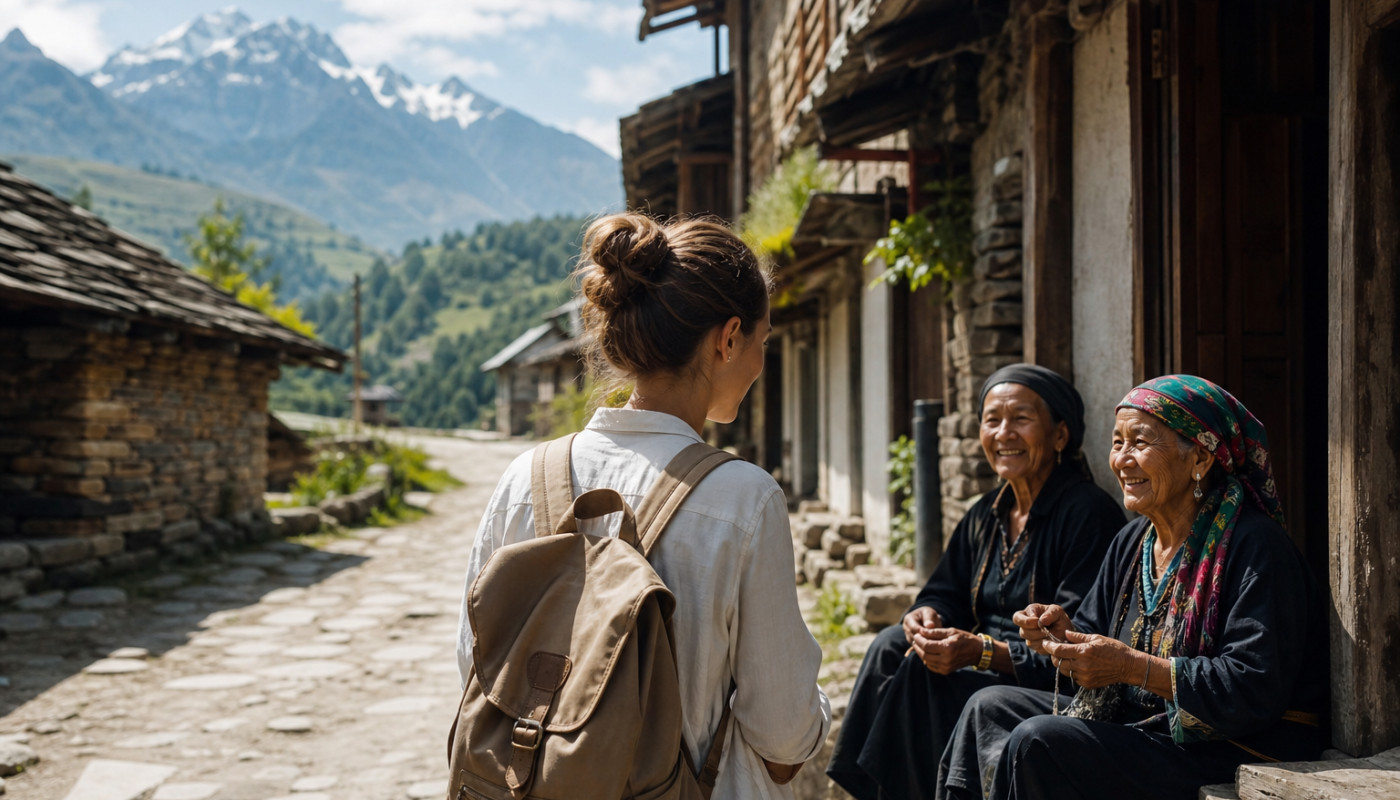
Authentic travel used to be marketed as distance, danger or difficulty. Today it is increasingly defined by proximity to ordinary life, and by experiences that do not feel engineered. That is why small markets, neighborhood sports, regional festivals and unglamorous public spaces are suddenly valuable. Travelers are paying attention to what a place does on a Tuesday, not only what it stages on a Saturday night, and they are using social platforms less as glossy inspiration and more as practical reconnaissance: which bakery is busy with residents, where families picnic, what time the ferry actually runs.
The trend is reinforced by a wider cultural correction. After years of checklist tourism, there is fatigue with the “seen it, posted it, moved on” rhythm, and there is a growing discomfort with traveling in ways that displace local communities. Academic research on tourism’s social impact has long warned about the commodification of culture, and now those arguments are moving into mainstream conversation, helped by housing debates and by local protests in some destinations. For travelers, choosing a less-visited place can feel like a small ethical act, even if the reality is more complex, because tourism pressure can simply migrate if it is not managed.
What makes the new authenticity different is that it is not always about remoteness. It can mean a mid-sized city with a strong food culture, a coastal region outside peak season, or a suburb that has its own identity. It can also mean choosing a destination where you can move like a local: by tram, on foot, by bike, and by public ferry rather than through a chain of taxis and guided transfers. In Australia, for example, travelers building an itinerary around liveable neighborhoods, sports culture and day trips into nature often find that the best “in” is not a tour bus but a well-planned base, and resources such as https://www.melbourne-trip.com reflect how demand is shifting toward practical, ground-level planning rather than a purely inspirational pitch.
The new playbook: shoulder seasons, longer stays
Here is the punchline: the route matters less than the rhythm. Off-the-beaten-path travel is being powered by two choices that are deceptively simple, and they are changing the industry’s calendar. The first is traveling outside the peak window. Shoulder season used to be a compromise, now it is a strategy, because it offers lower prices, fewer crowds and often a more pleasant climate, especially as heatwaves become a recurring feature of European summers and as wildfire risk affects parts of North America and the Mediterranean. When the “best” months start to feel physically uncomfortable, the definition of high season shifts.
The second choice is staying longer. Longer stays spread the fixed costs of a flight, reduce the sense of rushing, and make it easier to engage with a place beyond its highlight reel. They also change what travelers buy: fewer attractions, more groceries, more local transport, more neighborhood restaurants, and sometimes a language class or a community event. That spending profile is often welcomed by destinations seeking “better” tourism rather than simply “more,” and it is why many tourism boards now market slow travel, regional dispersal and sustainability with a level of seriousness that would have sounded like niche preaching a decade ago.
For travelers, the practical playbook is clear. Choose one base and explore outward by train or regional transport, and prioritize experiences that have depth rather than spectacle: a day hike, a match, a local museum with context, a food market with conversation. If you must visit a blockbuster sight, book early, go at off-peak hours, and treat it as one chapter, not the whole story. The point is not to brag about being “off the beaten path,” it is to return from a trip feeling that you were present, and that you did not spend half your holiday in a queue.
How To Plan Without Overpaying
Book transport early, then keep lodging flexible, and target shoulder-season weeks for the biggest savings. Set a daily cap, and prioritize one paid highlight per day, because costs accumulate fastest in food and local transport when plans are improvised. Check city passes and regional rail deals, and look for public incentives: some destinations offer museum discounts, transit bundles or low-season promotions.
Similar
Why Hidden Towns Keep Rewriting Europe’s Travel Map
Your Guide To Outdoor Activities In Scenic French Locales

Exploring Hidden Coves: Discovering Secret Beaches For Your Next Trip

Cultural Hotspots In Paris 13: Museums And Galleries Worth Visiting

A Comprehensive Review Of The Best Seasonal Weather Conditions For Surfing Panga Drops
